CCUS Pipeline Development Raises New Requirements for Flanges and Pipe Fittings
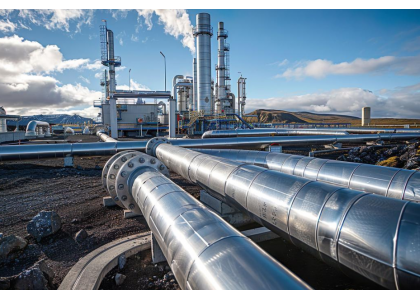
Carbon Capture, Utilization and Storage (CCUS) is moving toward larger-scale deployment, creating a new area of demand for pipeline equipment, valves, flanges and pipe fittings.
Recent industry analysis indicates that hydrogen and CCUS projects are gradually moving from early pilot concepts toward projects seeking commercial-scale investment and deployment.
The development of CO₂ transportation networks is particularly significant for the piping industry. Captured carbon dioxide may need to be compressed and transported through pipelines to storage sites, creating requirements for reliable connections and long-term pipeline integrity.
Regulation is also becoming more important. In the United Kingdom, new 2026 offshore rules bring CCUS and offshore hydrogen activities more clearly into the existing major-hazard safety framework. Dense-phase CO₂ pipelines used for CCUS are now treated as major accident hazard infrastructure, with greater attention to pipeline integrity, leak detection and emergency response.
For flange and fitting manufacturers, this development could influence future procurement requirements.
A CO₂ pipeline system can include elbows, tees, reducers, flanges, valves and other mechanical components. While welded joints are widely used for permanent pipeline sections, flanged connections remain important around valves, equipment, inspection points and sections requiring future maintenance.
Consequently, suppliers may face greater emphasis on material compatibility, pressure resistance, dimensional accuracy, sealing performance and documentation.
The CCUS market may also create demand for specialized materials and higher-quality manufacturing processes. Depending on pressure, temperature and project design, engineers need to consider corrosion, phase behavior, fracture resistance and other factors when selecting pipeline materials and components.
For exporters of industrial flanges and fittings, CCUS represents an emerging opportunity beyond traditional oil and gas applications. Suppliers that already have experience with international standards, pressure-rated products, material certificates and project documentation may be well positioned to enter this developing market.