Global Flange Market Shifts Toward High-Integrity and Specialized Connections
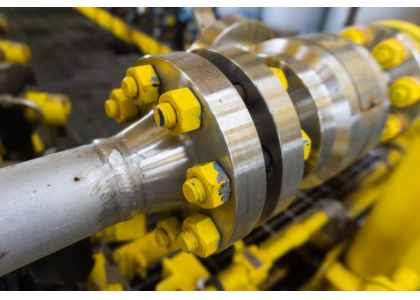
The global flange market is entering a period of steady expansion, with demand increasingly shifting toward higher-performance and application-specific connection solutions.
Recent market research estimates that the global flange market could reach approximately USD 5.85 billion in 2026 and grow to more than USD 8.6 billion by 2033. Welding neck flanges are expected to remain one of the largest product segments, supported by their strength and reliability in demanding industrial applications.
The change is not simply about market volume. Buyers in oil and gas, petrochemical, power generation and infrastructure projects are increasingly looking for products that combine dimensional accuracy, material traceability and reliable performance under pressure.
High-pressure and large-diameter applications are particularly important. These projects may require forged carbon steel or stainless steel flanges manufactured according to international standards such as ASME, EN, DIN or other project-specific specifications.
Another important development is the growing demand for customized configurations. Flange suppliers may be required to provide special bore dimensions, customized drilling patterns, different facing types, RTJ grooves or non-standard dimensions to match existing equipment and pipeline systems.
Material selection is also becoming more application-oriented. Carbon steel remains an important material because of its balance between cost and mechanical performance, while stainless steel and alloy materials continue to be used where corrosion resistance or more demanding service conditions are required.
For international buyers, quality documentation is becoming just as important as the physical product. Mill Test Certificates, heat-number traceability, dimensional inspection reports and third-party inspection can all play a role in project procurement.
This creates opportunities for manufacturers that can combine competitive pricing with engineering support and reliable quality control.