Pipe Fitting Manufacturing Moves Toward Higher-Value and Customized Engineering
The international pipe fittings industry is entering a period in which manufacturing capability is increasingly being measured by more than production volume. Custom engineering, advanced machining, quality control and international standard compliance are becoming important competitive factors for suppliers serving global industrial projects.
The trend was highlighted at the 2026 China Tube & Pipe Forming Conference, which concluded in June. The event emphasized technological innovation, quality-oriented development and the international development of China's pipe fitting industry.
For traditional products such as elbows, tees, reducers and flanges, basic manufacturing capability is no longer enough for many international engineering projects. Buyers increasingly expect suppliers to handle multiple standards, materials, pressure classes and customized dimensions.
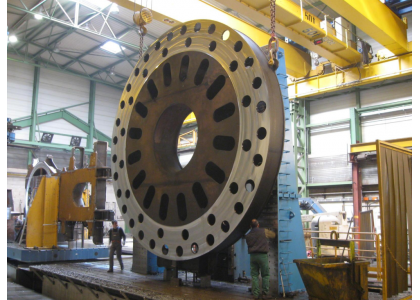
Large-diameter products are a good example. Industrial projects may require non-standard dimensions, special wall thicknesses, unusual flange drilling, customized bore dimensions or combinations of different international standards. Producing these components requires accurate forming, machining and inspection rather than simply following a standard catalogue.
Another important trend is the growing importance of manufacturing traceability. International buyers are increasingly requesting complete documentation packages, including material certificates, heat numbers, dimensional inspection reports, pressure test records and non-destructive testing results where applicable.
Digital manufacturing is also expected to play a larger role. CNC machining, automated inspection and improved production management can help manufacturers reduce dimensional variation and improve repeatability, particularly for large and heavy components.
The market is also becoming more application-driven. Pipe fittings supplied for oil and gas, petrochemical, power generation, water infrastructure, hydrogen and carbon-management projects can have significantly different requirements even when the basic product type is the same.
For exporters, this creates an opportunity to move away from pure price competition. A supplier that can provide a complete package — product selection, material compliance, machining, inspection, documentation and logistics — can offer greater value to engineering contractors and distributors.