Offshore CCUS Expansion Creates New Opportunities for High-Integrity Piping Components
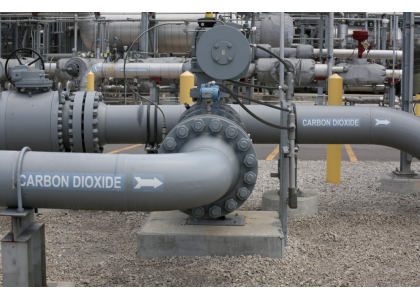
Carbon capture, utilization and storage (CCUS) is becoming an increasingly important part of the global energy transition, and new regulatory developments are bringing additional attention to the design and integrity of CO₂ transportation infrastructure.
In the United Kingdom, 2026 regulations have expanded the offshore safety and environmental framework to explicitly address carbon capture and storage and offshore hydrogen activities. Dense-phase CO₂ pipelines used in CCUS projects are now treated as major accident hazard infrastructure under the updated regulatory approach.
This development has implications throughout the piping supply chain.
CO₂ transportation systems can involve long-distance pipelines, compression facilities, valves, fittings and numerous mechanical connections. Flanges and fittings therefore have to withstand pressure, temperature changes, vibration and potentially demanding operating environments while maintaining long-term sealing integrity.
For suppliers, this means that the requirements of CCUS projects can go well beyond simply supplying standard pipe fittings. Material traceability, dimensional control, welding quality, non-destructive examination, pressure testing and documentation can all become important elements of project procurement.
The role of flange connections deserves particular attention. Flanges provide convenient access for inspection, maintenance and equipment replacement, but every bolted connection also represents a potential leakage point. Proper flange selection, gasket compatibility, bolt loading and installation procedures therefore become important factors in maintaining system integrity.
The growth of CCUS is also encouraging the use of specialized pipeline components for high-pressure service. Depending on project conditions, carbon steel, stainless steel and other engineered materials may be selected for different sections of a system.
For international flange and fitting manufacturers, the expansion of CCUS projects could create opportunities in several areas, including forged flanges, butt-weld fittings, reducers, tees, elbows, isolation components and custom-engineered piping assemblies.
At the same time, procurement requirements are becoming increasingly documentation-oriented. Buyers may request material certificates, heat numbers, inspection records, dimensional reports and third-party inspection documentation together with the physical products.